
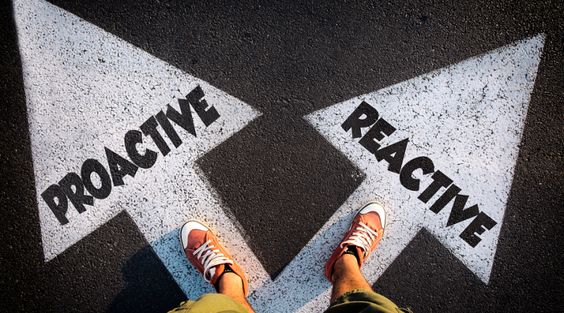
Proactivity means more than just taking the initiative. As humans, we are responsible for our own lives. In other words, proactive people recognize they are solely responsible for their actions. They do not blame the conditions or circumstances for their behavior.
The behavior of proactive people is a function of their decisions. On the contrary, an emotionally reactive person will blame everything on their condition. When talking about Habit 1, Covey describes how a proactive approach helps to acknowledge a mistake quickly so that instant actions can be taken to resolve it instead of waiting for it to become a more serious issue.
Covey explains that people who exhibit these habits are proactive and tend to take action compared to reactive people who depend on their physical environment. He describes that proactive people invest their time and energy in resolving issues rather than reactive people who spend their time worrying and blaming others.
He also discusses that proactive people concentrate on their circle of influence, which revolves around health, children, problems, and work. In contrast, reactive people emphasize their circle of concern which rotates around national debt, terrorism, or weather. For long-term productivity, we suggest using the proactive approach.
“The best way to predict your future is to create it - Abraham Lincoln.”
To be proactive is to take responsibility for your life. Habit one, being proactive, is the foundation of all the other habits in the book “7 habits of highly effective people”.
We spent some time scouring the internet to find some nuggets related to this particular habit of highly effective people.
- Circle of Influence is an interesting take by Franklin Covey in 7 habits be proactive about how proactive people influence the circle over which they have control. If one is proactive, one can take small steps, redefine the purpose of their existence in one role, and take steps for the greater good.
- This Pinterest board is about proactive seven habits. It has some exciting ideas for kids, teens, and professionals to follow. You can check it out and, if possible, share and save some.
Introduction to Proactivity
Proactivity is more than just a buzzword—it’s a personal responsibility habit that empowers individuals to take initiative and control over their own lives. Proactive people recognize that, regardless of circumstances, they have the ability to choose their response. Instead of blaming conditions or external events, they focus their efforts on what they can influence, such as their health, their children, and the problems they face at work. This proactive approach is about taking responsibility for your own life, making conscious decisions, and prioritizing your energy on things you can actually change.
In contrast, reactive people focus on things over which they have little or no control, like the national debt, terrorism, or the weather. They often blame circumstances for their behavior, feeling powerless to affect their own lives. This mindset is reflected in reactive language—phrases like “I have to” or “I can’t”—which reinforce a sense of helplessness and keep them stuck in a cycle of reacting to external events.
Proactive people, on the other hand, use proactive language such as “I can” and “I will.” This shift in language is more than just words; it’s a reflection of a mindset that prioritizes taking initiative and making things happen. By focusing on their circle of influence—the areas where they can make a difference—proactive people are able to direct their efforts and energy toward meaningful change, rather than wasting time and energy worrying about things outside their control.
The concept of the circle of influence versus the circle of concern is central to this habit. While the circle of concern includes all the things we might worry about but cannot control, the circle of influence is made up of the things we can actually affect through our actions and decisions. Proactive people focus on expanding their circle of influence, while reactive people spend their energy reacting to circumstances and conditions they cannot change.
Developing a proactive approach is a giant step toward achieving greater success and happiness. It means taking responsibility for your own life, making deliberate choices, and using proactive language to stay motivated and focused. By prioritizing your efforts on what you can control, you gain a sense of freedom and the ability to create the life you want, rather than simply reacting to what happens around you.
As Stephen Covey famously said, “The best way to predict your future is to create it.” By adopting a proactive approach, you can take control of your own destiny, overcome obstacles, and achieve your goals. Whether you’re facing challenges at work, at home, or in your personal growth, proactivity gives you the power to respond effectively, prioritize what matters most, and make lasting, positive changes in your life.
How To Differentiate Proactivity From Reactivity?
Proactive and reactive thinking is more than just two ways of thinking. Instead, they are a whole life philosophy. They are ways of looking introspectively and at the outside world for yourself. The most successful people think proactively initially, and then they think reactively. This helps them to achieve long-term productivity and the best results in their daily lives.
Reactive behavior refers to the quick response to feelings about an uncontrollable situation. The reactions often result from actions that took place in the past. For example, if you lose a game, the sense of disappointment is reactive behavior. In other cases, reactive behavior results when someone places the needs of others over their priorities.
A proactive person takes control of their responses and focuses on what they can influence, rather than being controlled by external circumstances. Proactive people intentionally direct their efforts toward areas within their Circle of Influence®, ensuring their energy is spent on manageable and impactful actions.
Reactive behavior refers to the quick response to feelings about an uncontrollable situation. The reactions often result from actions that took place in the past. For example, if you lose a game, the sense of disappointment is reactive behavior. In other cases, reactive behavior results when someone places the needs of others over their priorities. Reactive people often let external factors, such as the weather, determine whether they feel good or not.
On the other hand, proactive behavior or a proactive approach concerns anticipating problems or issues to generate positive results. People who practice proactive behavior often look at the entire situation to plan for unprecedented circumstances. Proactive planners think about what to do before an event happens. In other words, you make decisions based on your thinking. While things happen outside our control, proactive people focus on how they choose to respond.
Proactive thinking leads to success since you are planning for the future. In simple words, proactive thinkers control the world around them. On the contrary, reactive thinkers are controlled by the world.
The Circle of Influence
The Circle of Influence is a powerful concept that highlights the areas of our lives where we have control and can make a positive impact. Proactive people focus on their Circle of Influence, which includes aspects they can control, such as their health, relationships, and work-related problems. By concentrating on these areas, proactive people can expand their influence over time, creating more choices and opportunities.
In contrast, reactive people focus on their Circle of Concern, which encompasses things they have little or no control over, such as the national debt, terrorism, or the weather. This focus on uncontrollable factors often leads to stress and anxiety, as reactive people are constantly reacting to external circumstances.
Focusing on the Circle of Influence is essential for taking responsibility and making progress in our lives. To ensure effective personal growth, it is important to set clear measures—specific, actionable criteria—to track progress and evaluate success within your Circle of Influence. By concentrating on what we can control, we can reduce the stress and anxiety caused by constantly reacting to things outside of our control. This proactive approach allows us to make meaningful changes and achieve our goals.
The Circle of Influence is a key concept in the 7 Habits framework, helping individuals become more effective in their personal and professional lives. By focusing on their Circle of Influence, proactive people can take charge of their own lives and create a positive impact on the world around them.
How Can You Be Trained To Be Proactive?
You could develop your sense of proactivity by tuning in to your daily frustrations. The more you realize what does not work around you, the more inclined you would be to want to fix it if possible.
- Pay attention to what frustrates you daily and find a way to solve it if possible. By fixing minor issues every day, we will start taking responsibility.
- Another way to start is to spend 5 minutes at night reflecting on your day, identifying these frustrations, and considering a potential solution. The next day, you try actually to apply what you came up with.
Key Takeaways of Habit 1 of 7 Habits
Being proactive means taking charge of your doings instead of waiting for others to let you know what needs to be done. Proactive people focus on taking action toward solving the problem instead of relying on suggestions from others.
- Proactive people are always prepared for things that help them mitigate risks and deal with every situation best.
- Proactive nature helps to identify the need for change. When you plan something for the future, you end up having ample time to think about things that can cause hindrances and how you can work to resolve the issues more proficiently.
- A proactive approach to life helps you stay head over heels; you are always working and planning for things beforehand to fix them.
- Proactive approach helps businesses, too. If they take proactive actions toward a problem, they can simultaneously evade unfortunate circumstances and save time and money. Your business will be able to tackle the issue in its initial stages before it transforms into a disaster.
- Proactive organizations build the future they want. They plan the future roadmap instead of waiting for external forces to decide their direction.
-
People with a proactive approach are self-aware. They know where they lack and work on their weaknesses to avoid obstacles easily.
Conclusion
Having a proactive approach is all about taking the responsibility of your life. Proactive individuals do not blame their circumstances and plan the future ahead. They do not let the external force influence their behavior.
If you want to pursue a proactive approach, WeekPlan may be the ideal fit for you. This is since WeekPlan lets you plan for the future in advance. With WeekPlan, you can easily set your future roadmap and build the future as you desire.
More Posts
Time Tracking Benefits for Freelancers & Small Business Owners
![Freelancers and Small Business Owners]() Time is a valuable resource, and tracking it efficiently is crucial to the success of freelancers and small business owners. One powerful tool that can help optimize [time...
10 WFH (Work from Home) Commandments Midst COVID-19 Outbreak
COVID-19 is a deadly virus that has taken the world by storm. The notorious Corona Virus Disease causes respiratory failure and can spread from person to person via closed contact. The first positive...
11 Effective Time Audit Stratigies for Employee
Being good with time is key to getting more done at work. A time audit helps find where time is wasted. There are a few ways to conduct a time audit for employees,...
How to Choose the Right Monthly Planner for Your Lifestyle
![How to Choose the Right Monthly Planner for Your Lifestyle]() Using a digital monthly planner is a terrific way to remain on top of your schedule and organized in this digital age. Choosing...